In today’s competitive digital world, businesses are constantly looking for better ways to connect with customers, generate leads, and increase sales. While social media platforms and paid advertising continue to grow, email marketing remains one of the most effective channels for building long-term customer relationships.
However, choosing the right platform is not always easy. The market is filled with multiple email marketing tools, and every platform claims to provide better automation, higher engagement, advanced analytics, and improved results.
This is where a proper guide for email marketing software vs competition becomes important.
Before investing in an email marketing platform, businesses need to understand how different solutions compare in terms of features, pricing, automation capabilities, ease of use, scalability, and overall performance.
A small business may need simple newsletter tools, while a growing company may require advanced automation workflows, customer segmentation, CRM integrations, and detailed reporting. Selecting the wrong software can lead to unnecessary costs, limited growth opportunities, and inefficient marketing campaigns.
In this Email Marketing Software vs Competition: Best Guide 2026, we will explore the important factors businesses should consider before selecting an email marketing platform. We will compare essential features, explain the benefits of advanced tools, discuss common mistakes, and help you understand what makes one email marketing solution different from another.
Whether you are a startup owner, digital marketer, ecommerce business, or an established company, this comparison guide will help you make a more informed decision.
What Is Email Marketing Software?
Email marketing software is a digital tool that helps businesses create, manage, automate, and analyze email campaigns. Instead of manually sending individual emails, companies can use these platforms to communicate with thousands of subscribers efficiently.
Modern email marketing software allows businesses to:
- Create professional email campaigns
- Manage subscriber lists
- Send automated messages
- Personalize customer communication
- Track email performance
- Improve customer engagement
- Build long-term relationships
These platforms are designed to simplify email marketing by combining multiple features into one system.
For example, a business can create a welcome email sequence for new subscribers, send promotional campaigns to selected customers, and analyze which emails generate better engagement.
Find The Right Email Marketing Solution
Compare features, automation, and pricing to discover the software that fits your business goals.
Choose a platform that helps you create better campaigns and grow customer relationships.
Why Email Marketing Software Matters in 2026
Email marketing has evolved significantly over the years. Earlier, businesses mainly used emails for basic newsletters and promotional messages. Today, advanced platforms use automation, artificial intelligence, customer data, and personalization to create highly targeted campaigns.
Businesses in 2026 need more than just an email sending tool. They need a complete marketing system that helps them understand customer behavior and deliver relevant communication.
Key reasons why businesses need advanced email marketing software:
1. Better Customer Personalization
Customers expect brands to provide relevant content instead of generic messages.
Modern email marketing platforms allow businesses to personalize emails based on:
- Customer interests
- Previous interactions
- Purchase history
- Website activity
- Engagement patterns
Personalized emails can create stronger connections and improve customer experience.
2. Marketing Automation Saves Time
Manual email campaigns require significant time and effort.
With automation features, businesses can create workflows that automatically send emails based on customer actions.
Examples include:
- Welcome emails after signup
- Follow-up emails after purchases
- Cart abandonment reminders
- Customer re-engagement campaigns
- Birthday or anniversary emails
Automation helps businesses maintain communication without manually managing every campaign.
3. Improved Campaign Tracking
Sending emails without measuring performance makes it difficult to understand results.
Email marketing software provides important analytics such as:
| Metric | Purpose |
|---|---|
| Open Rate | Measures how many users opened the email |
| Click Rate | Shows user interaction with links |
| Conversion Rate | Tracks completed actions |
| Bounce Rate | Identifies delivery issues |
| Unsubscribe Rate | Shows customer interest level |
These insights help marketers improve future campaigns.
Email Marketing Software vs Competition: Major Differences
When comparing different platforms, businesses should look beyond pricing. Two tools may offer similar features but provide different experiences in terms of automation, usability, integrations, and scalability.
The following comparison highlights the major differences businesses should evaluate.
| Comparison Factor | Basic Email Tools | Advanced Email Marketing Software |
|---|---|---|
| Email Automation | Limited automation | Advanced workflow automation |
| Personalization | Basic customer details | Behavioral personalization |
| Analytics | Simple reporting | Detailed campaign insights |
| Segmentation | Basic lists | Advanced audience targeting |
| Integrations | Limited connections | CRM, ecommerce, API integrations |
| Scalability | Suitable for small lists | Supports business growth |
| Testing Features | Basic testing | Advanced A/B testing |
A complete guide for email marketing software vs competition shows that the right platform is not only about sending emails but also about improving customer relationships and marketing efficiency.
Important Features To Compare Before Choosing Email Marketing Software
Choosing an email marketing platform requires careful evaluation. Businesses should compare multiple factors to understand which solution fits their goals.
1. Email Automation Capabilities
Automation is one of the most important features of modern email marketing software.
A powerful automation system allows businesses to create customer journeys that run automatically.
Important automation features include:
- Welcome sequences
- Lead nurturing campaigns
- Automated follow-ups
- Customer retention emails
- Behaviour-based workflows
A platform with better automation capabilities can reduce manual work and improve campaign consistency.
2. Contact Management and Segmentation
Every customer is different, so sending the same email to everyone may not provide the best results.
Advanced segmentation allows businesses to divide audiences based on:
- Location
- Purchase behavior
- Interests
- Engagement level
- Customer lifecycle stage
Better segmentation helps deliver more relevant content to subscribers.
3. Email Templates and Design Options
Professional email design plays an important role in customer engagement.
A good email marketing platform should provide:
- Ready-made templates
- Drag-and-drop editors
- Mobile-friendly designs
- Custom branding options
- Easy editing features
Businesses should choose tools that make creating attractive emails simple, even without design experience.
4. Analytics and Reporting
Data-driven decisions are essential for successful email campaigns.
Before choosing software, check whether it provides detailed reporting features.
Important analytics include:
- Campaign performance reports
- Subscriber activity
- Engagement tracking
- Conversion measurement
- Revenue tracking
Better analytics help businesses understand what works and what needs improvement.
Improve Your Email Marketing Strategy
Discover how modern email marketing software can simplify campaigns and improve engagement.
Use powerful tools to connect with customers through smarter communication.
Email Marketing Software Feature Comparison in 2026
When businesses compare different email marketing platforms, they should focus on features that directly impact campaign performance, customer engagement, and business growth.
A good email marketing software comparison should not only consider the number of features but also how effectively those features solve real marketing challenges.
Feature Comparison Table
| Feature | Why It Matters | What To Look For |
|---|---|---|
| Automation | Saves time and improves consistency | Workflow builders, triggers, customer journeys |
| Personalization | Creates better customer experiences | Dynamic content, customer data usage |
| Segmentation | Helps target the right audience | Advanced filters and audience groups |
| Analytics | Measures campaign success | Reports, tracking, performance insights |
| Integrations | Connects marketing systems | CRM, ecommerce, API support |
| Deliverability | Ensures emails reach inboxes | Reputation management, optimization tools |
| Templates | Improves email creation process | Responsive designs and customization |
| Security | Protects customer data | Data protection features and permissions |
A complete guide for email marketing software vs competition should evaluate these features because they determine how effectively a platform supports long-term marketing goals.
Benefits of Using Advanced Email Marketing Software
Advanced email marketing software provides several advantages compared to basic email tools. Businesses can improve communication, automate repetitive tasks, and create personalized experiences for customers.
1. Saves Marketing Time
One of the biggest advantages of email automation tools is reducing manual effort.
Instead of creating and sending every email separately, businesses can build automated campaigns that run continuously.
For example:
- A new subscriber receives a welcome email automatically.
- A customer receives product recommendations based on previous purchases.
- A user who has not interacted for months receives a re-engagement message.
This allows marketing teams to focus on strategy instead of repetitive tasks.
2. Improves Customer Engagement
Generic emails often receive lower engagement because they do not match customer interests.
Modern email marketing platforms help businesses send more relevant messages through:
- Audience segmentation
- Personalized recommendations
- Behavior-based emails
- Targeted campaigns
When customers receive useful information at the right time, engagement opportunities increase.
3. Helps Increase Conversion Opportunities
Email marketing software allows businesses to create campaigns designed for different stages of the customer journey.
Examples:
| Customer Stage | Email Campaign |
|---|---|
| New Visitor | Welcome email |
| Interested Customer | Product information email |
| Existing Buyer | Upselling or recommendation email |
| Inactive Customer | Re-engagement campaign |
This structured approach helps businesses maintain communication throughout the customer lifecycle.
4. Provides Better Marketing Insights
Without proper data, businesses cannot understand whether their campaigns are successful.
Advanced email marketing software provides insights about:
- Which emails perform better
- Which customers engage more
- Which subject lines generate clicks
- Which campaigns drive conversions
These insights help marketers continuously improve their strategy.
Choose Smarter Marketing Tools
Compare leading email marketing solutions and understand what makes each platform different.
Make an informed decision based on features, flexibility, and business needs.
Email Marketing Automation: A Key Difference Between Platforms
Automation is one of the biggest factors separating basic email tools from advanced email marketing software.
A simple platform may allow users to send newsletters, but advanced solutions allow businesses to create complete automated customer journeys.
Examples of Email Automation Workflows
Welcome Email Automation
When someone subscribes:
Step 1:
User joins email list.
Step 2:
Software automatically sends a welcome message.
Step 3:
Follow-up emails introduce products, services, or valuable content.
Abandoned Cart Automation
For ecommerce businesses:
- Customer adds product to cart
- Customer leaves without purchase
- Automated reminder email is sent
- Customer receives product benefits or offers
This helps recover potential lost sales.
Customer Re-Engagement Automation
Businesses can reconnect with inactive subscribers through:
- Special updates
- Helpful content
- Personalized messages
- Customer surveys
Automation makes communication more consistent and effective.
Build Better Customer Connections
Turn simple emails into meaningful customer experiences with advanced marketing features.
Create personalized campaigns that help your audience stay connected with your brand.
Free vs Paid Email Marketing Software Comparison
Many businesses start with free email marketing tools because they want to test campaigns without investment. However, paid platforms usually provide additional features required for business growth.
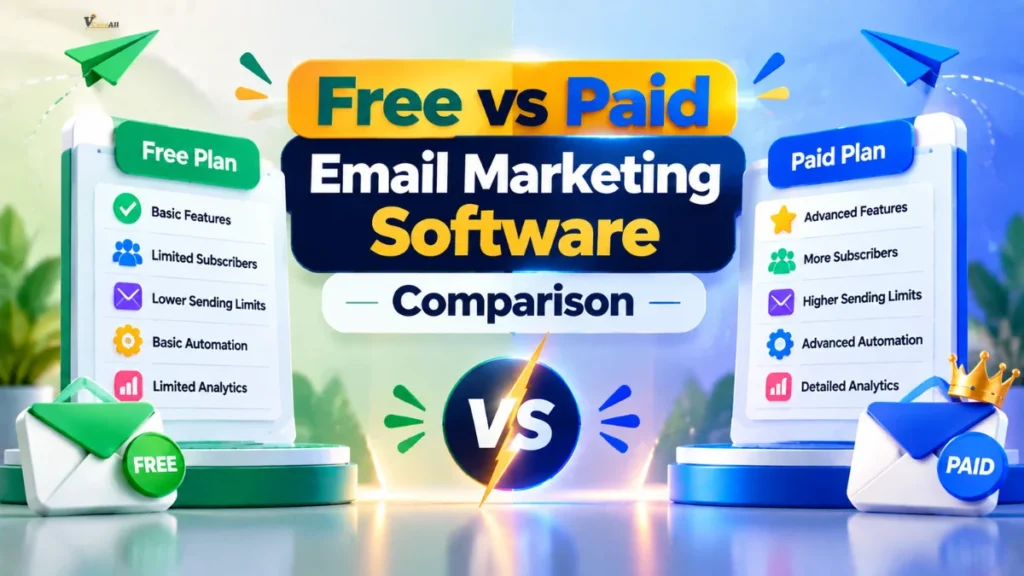
Free vs Paid Email Marketing Software Table
| Factor | Free Tools | Paid Software |
|---|---|---|
| Email Sending Limits | Usually restricted | Higher sending capacity |
| Automation | Basic features | Advanced workflows |
| Analytics | Limited reports | Detailed insights |
| Templates | Fewer options | Professional templates |
| Integrations | Limited | Multiple integrations |
| Support | Basic support | Priority support |
| Scalability | Limited growth | Designed for expansion |
Free tools can work well for beginners, personal projects, or small email lists. However, businesses planning long-term growth often require advanced email marketing software with automation and analytics capabilities.
How Email Marketing Software Improves Business Growth
Email marketing is not only about sending promotional messages. It is a complete communication strategy that helps businesses build trust and maintain customer relationships.
Major Growth Benefits Include:
Better Lead Nurturing
Not every visitor is ready to buy immediately.
Email marketing software helps businesses educate potential customers through:
- Helpful newsletters
- Product updates
- Educational content
- Follow-up campaigns
This keeps the brand connected with potential customers.
Stronger Customer Retention
Getting new customers is important, but retaining existing customers is equally valuable.
Businesses can use email campaigns to:
- Share updates
- Provide customer support information
- Offer personalized recommendations
- Encourage repeat purchases
Improved Brand Recognition
Regular and valuable communication helps customers remember a brand.
Consistent email campaigns can strengthen:
- Brand awareness
- Customer trust
- Long-term relationships
How To Choose The Best Email Marketing Software in 2026
Selecting the right platform depends on your business requirements. There is no single solution that works perfectly for every company.
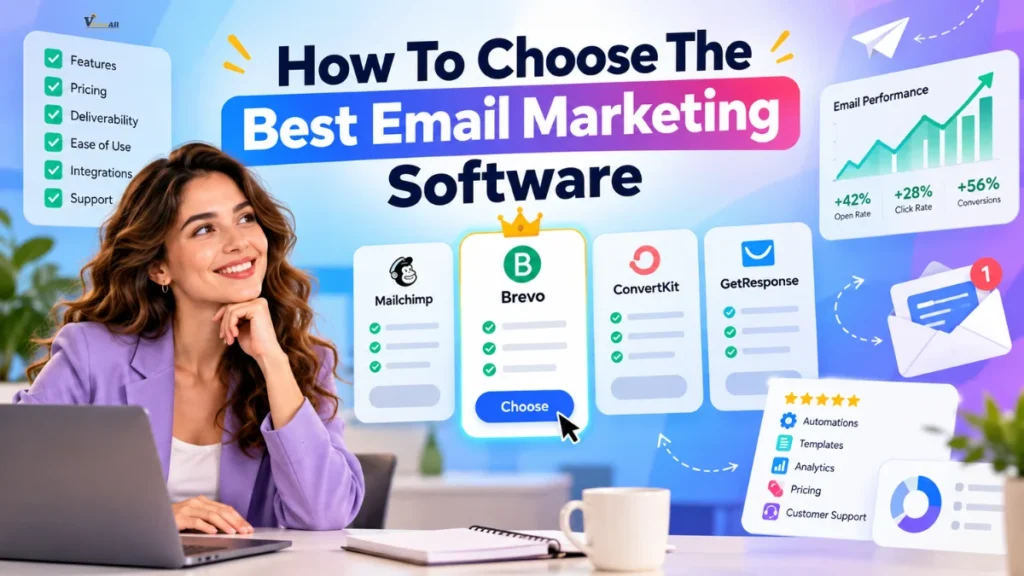
Before choosing email marketing software, consider the following factors.
1. Understand Your Marketing Goals
First, identify what you want to achieve.
Common goals include:
- Increasing sales
- Growing email subscribers
- Improving customer retention
- Automating marketing tasks
- Generating more leads
Your goals will determine which features you need.
2. Evaluate Your Audience Size
Different businesses have different subscriber requirements.
A small business with a few thousand contacts may need simple tools, while larger companies may require enterprise-level solutions.
Consider:
- Current subscriber count
- Future growth plans
- Email frequency
- Campaign volume
3. Compare Automation Features
Automation is becoming a major requirement in 2026.
Look for platforms that offer:
- Easy workflow creation
- Customer journey automation
- Trigger-based emails
- Personalization options
4. Check Integration Options
A good email marketing platform should work well with existing business systems.
Useful integrations include:
- Customer relationship management (CRM)
- Ecommerce platforms
- Website builders
- Analytics tools
- Payment systems
Integrations help businesses create a connected marketing ecosystem.
5. Consider Pricing and Scalability
The cheapest option is not always the best choice.
Businesses should compare:
- Monthly pricing
- Subscriber limits
- Available features
- Upgrade options
- Long-term costs
A scalable platform can support business growth without requiring frequent migration.
Grow Your Email Campaign Performance
Track results, understand customer behavior, and improve your marketing approach.
Use analytics-driven insights to create campaigns that deliver better experiences.
Common Mistakes Businesses Make When Choosing Email Marketing Software
Many businesses select email marketing tools based only on price or popularity. This can create problems later.
Here are common mistakes to avoid:
1. Choosing Software Without Checking Automation
A platform may look affordable but lack important automation features.
Always check whether it supports your future marketing needs.
2. Ignoring Email Deliverability
A beautiful email campaign is useless if it does not reach customer inboxes.
Businesses should consider platforms that focus on:
- Email reputation
- Delivery performance
- Sender authentication
- Campaign optimization
3. Not Comparing Integration Options
Marketing tools should work together.
Ignoring integrations can create:
- Data management problems
- Manual work
- Workflow limitations
4. Selecting Based Only on Price
Low-cost software may have limitations in:
- Automation
- Analytics
- Subscriber management
- Support
Businesses should compare overall value instead of only monthly cost.
Future Trends in Email Marketing Software 2026
The email marketing industry continues to evolve with new technologies, changing customer expectations, and smarter automation systems. Businesses that want better engagement need to understand upcoming trends and adapt their strategies accordingly.
A modern guide for email marketing software vs competition is incomplete without understanding how email marketing platforms are changing in 2026.
1. AI-Powered Email Marketing Automation
Artificial intelligence is becoming an important part of email marketing platforms.
AI-powered features help businesses improve campaigns by analyzing customer behavior and suggesting better strategies.
Examples include:
- AI-generated email content
- Smart subject line recommendations
- Automated audience segmentation
- Predictive customer behavior analysis
- Personalized product recommendations
AI helps marketers create more relevant communication while reducing manual effort.
2. Advanced Personalization
Customers now expect brands to understand their needs.
Future email marketing platforms will focus more on personalized experiences using customer data.
Examples:
- Personalized product suggestions
- Location-based messages
- Individual customer journeys
- Behavior-based email campaigns
Instead of sending the same email to everyone, businesses can deliver messages based on customer interests and actions.
3. Better Customer Journey Automation
Email marketing is moving beyond simple campaigns.
Businesses are focusing on complete customer journeys that include multiple touchpoints.
A customer journey may include:
| Customer Action | Automated Response |
|---|---|
| New subscription | Welcome email series |
| Product browsing | Personalized recommendation |
| Purchase completed | Follow-up email |
| No activity | Re-engagement campaign |
This approach helps businesses maintain consistent communication.
4. Improved Email Analytics
Data will continue to play an important role in email marketing success.
Future platforms will provide deeper insights into:
- Customer engagement patterns
- Campaign performance
- Revenue generated
- Customer preferences
- Marketing effectiveness
Better analytics allow businesses to make smarter decisions.
5. Mobile-First Email Experiences
Most users check emails on smartphones.
Therefore, email marketing software will continue focusing on:
- Mobile-friendly templates
- Faster loading emails
- Responsive designs
- Simple user experiences
Businesses need platforms that create emails that work smoothly across all devices.
Upgrade Your Marketing Approach
Move beyond basic email tools with advanced features built for modern businesses.
Explore solutions that support automation, segmentation, and long-term growth.
Conclusion: Email Marketing Software vs Competition: Best Guide 2026
Email marketing continues to be one of the most valuable digital marketing channels for businesses. However, choosing the right platform requires careful research because every business has different goals, audiences, and marketing requirements.
This guide for email marketing software vs competition highlights the important factors businesses should consider before selecting an email marketing solution.
From automation and personalization to analytics, integrations, pricing, and scalability, each feature plays an important role in building successful email campaigns.
A basic email tool may be enough for simple communication, but businesses looking for growth should consider platforms that provide advanced automation, better customer insights, and flexible marketing capabilities.
Before choosing an email marketing platform, always compare:
- Features
- Pricing
- Ease of use
- Automation capabilities
- Integration options
- Future scalability
The right email marketing software can help businesses save time, improve customer engagement, build stronger relationships, and create more effective marketing campaigns in 2026 and beyond.
Frequently Asked Questions (FAQs)
1. What is the best email marketing software in 2026?
The best email marketing software in 2026 depends on business requirements, budget, audience size, and marketing goals.
A suitable platform should provide important features such as:
- Email automation
- Customer segmentation
- Personalization
- Analytics
- Integrations
- Reliable email delivery
Small businesses may prefer simple platforms, while larger companies may require advanced automation and enterprise-level features.
The right choice depends on how well the software matches your specific marketing needs.
2. How does email marketing software compare with competitors in 2026?
Email marketing software platforms differ based on features, pricing, usability, automation capabilities, and scalability.
When comparing email marketing software vs competitors, businesses should evaluate:
- Automation flexibility
- Reporting features
- Integration options
- Customer support
- Pricing structure
- Ease of use
A detailed comparison helps businesses select a platform that supports their long-term growth.
3. What features should I compare before choosing email marketing software?
Before selecting an email marketing platform, businesses should compare essential features such as:
- Automation workflows
- Email templates
- Contact management
- Audience segmentation
- Analytics and reporting
- A/B testing
- CRM integrations
- Pricing plans
The best platform should provide the right balance between features, usability, and cost.
4. Which email marketing software is best for small businesses?
Small businesses should choose email marketing software that is easy to use, affordable, and provides essential marketing features.
Important features for small businesses include:
- Simple campaign creation
- Automation tools
- Subscriber management
- Performance tracking
- Scalable pricing
A platform that can grow with the business is usually a better long-term choice.
5. Is paid email marketing software better than free tools?
Paid email marketing software generally provides more advanced features compared to free tools.
Paid platforms often include:
- Higher sending limits
- Advanced automation
- Better analytics
- More integrations
- Professional support
Free tools can be useful for beginners, but growing businesses often need additional features to manage larger audiences and more complex campaigns.
6. How do email marketing platforms improve campaign performance?
Email marketing platforms improve campaign performance by helping businesses send targeted and personalized messages.
They improve results through:
- Audience segmentation
- Automated follow-ups
- Performance tracking
- Personalized content
- Campaign testing
These features help businesses understand customer behavior and optimize future campaigns.
7. Which email marketing software offers the best automation features?
The best automation-focused email marketing software should provide flexible workflow options.
Important automation features include:
- Welcome email sequences
- Customer journey automation
- Trigger-based campaigns
- Follow-up emails
- Re-engagement workflows
Businesses should compare automation features based on their marketing objectives.
8. How much does email marketing software cost compared to competitors?
Email marketing software pricing depends on several factors, including:
- Number of subscribers
- Email sending volume
- Available features
- Automation requirements
- Business size
Some platforms offer free plans with basic features, while advanced solutions provide premium plans with additional capabilities.
Businesses should compare both pricing and features before making a decision.
9. What makes one email marketing platform better than another?
A good email marketing platform provides a combination of:
- Easy campaign management
- Powerful automation
- Reliable delivery
- Strong analytics
- Useful integrations
- Flexible pricing
The best platform is the one that helps a business achieve its marketing goals efficiently.
10. How can I choose the right email marketing software in 2026?
To choose the right email marketing software in 2026, businesses should follow a structured approach:
Step 1:
Identify marketing goals.
Step 2:
Understand required features.
Step 3:
Compare different platforms.
Step 4:
Review pricing and scalability.
Step 5:
Test usability before making a final decision.
Choosing software based on business needs rather than only price can help achieve better long-term results.