
Imagine earning a commission by recommending a product you genuinely like, without owning a website, managing a blog, or spending money on web hosting.
Sounds interesting, right?
Many people believe that starting affiliate marketing requires a professional website, technical knowledge, and a large investment. Because of this, they never even try.
But here’s something worth knowing: You don’t necessarily need a website to start affiliate marketing.
Today, people discover products through YouTube videos, Instagram Reels, Facebook communities, Pinterest, email newsletters, and other digital platforms. These channels can help you connect with potential customers and recommend useful products without building your own website.
For example, imagine you enjoy fitness and regularly share workout tips on Instagram. You recommend a pair of running shoes through an affiliate link. Someone finds your recommendation helpful, clicks your link, and purchases the shoes. Depending on the affiliate program’s terms, you could receive a commission.
You didn’t create a website. You didn’t manufacture the shoes. You simply helped someone discover a product that matched their needs.
That’s the basic idea behind affiliate marketing.
However, getting results is not as simple as dropping affiliate links everywhere. You need the right products, the right audience, useful content, and a strategy that builds trust.
If you’re wondering how to do affiliate marketing without a website, this complete guide will walk you through seven practical methods, the tools you can use, common mistakes to avoid, and realistic ways to build your affiliate marketing business.
Whether you’re a student, content creator, freelancer, or complete beginner, you’ll learn how to get started with limited resources and develop a strategy that can grow over time.
Start Your Affiliate Marketing Journey Today!
You don’t need a website or a big budget to get started.
Discover simple strategies to build your affiliate marketing journey.
What Is Affiliate Marketing?
Affiliate marketing is a performance-based marketing method in which an individual or business promotes another company’s products or services and earns a commission when a qualifying action takes place.
The action could be a purchase, registration, subscription, or another result defined by the affiliate program.
In simple words, you help a company connect with potential customers, and the company rewards you for eligible results.

How Does Affiliate Marketing Work?
The process usually involves five basic steps.
Step 1: Join an affiliate program
Find a company that offers an affiliate program and apply to become an affiliate partner.
Step 2: Get your affiliate link
After approval, you receive a special tracking link associated with your affiliate account.
Step 3: Promote the product
Share useful content about the product on an approved platform such as YouTube, Instagram, or another permitted channel.
Step 4: Someone takes action
A person clicks your affiliate link and completes a qualifying action, such as purchasing a product.
Step 5: Earn a commission
If the action satisfies the program’s tracking and payment conditions, the company credits your affiliate account.
Affiliate Marketing Example
Suppose you promote a software subscription that costs $100.
The company offers a 20% commission for an eligible sale.
| Details | Example |
|---|---|
| Product | Software subscription |
| Product price | $100 |
| Affiliate commission | 20% |
| Commission per eligible sale | $20 |
| Eligible sales | 10 |
| Total gross commission | $200 |
This is only a mathematical example, not an earnings prediction.
Actual results depend on the commission structure, approved sales, refunds, attribution rules, and your promotional performance.
The important point: Affiliate marketing allows you to recommend other companies’ products without creating or stocking those products yourself.
Can You Really Do Affiliate Marketing Without a Website?
Yes. Affiliate marketing without a website is possible, provided the affiliate program accepts the promotional channel you want to use.
A website is one way to attract visitors, but it isn’t the only way.
Social media, video platforms, approved email newsletters, and certain online communities can also connect audiences with useful recommendations.
However, there is an important distinction.
Not needing a website does not mean every affiliate program accepts every social media account or allows affiliate links on every platform.
Some programs accept established social accounts. Others require a qualifying website, a particular audience size, or approval for each promotional method.
For example, Amazon Associates has region-specific requirements for eligible websites, apps, and social media accounts. Its Indian program provides specific social network eligibility and content review requirements.
Always check the rules of the particular affiliate program before applying or promoting links.
Affiliate Marketing With a Website vs. Without a Website
| Feature | With a Website | Without a Website |
|---|---|---|
| Initial setup | Domain, hosting, website setup | Social profile or approved channel |
| Starting cost | May involve recurring expenses | Often possible with free tools |
| Technical knowledge | Some knowledge helpful | Usually minimal |
| Content format | Blogs, reviews, comparison pages | Videos, posts, newsletters |
| Traffic sources | Search engines, social media, email | Social platforms, video discovery, communities |
| Content control | Greater control | Depends on platform policies |
| Audience ownership | Can build owned assets | More dependent on third-party platforms |
| SEO opportunities | Website pages can rank in search | Platform content may appear in search |
| Long-term flexibility | Greater | Can be limited by account changes |
| Suitable for beginners | Yes | Yes |
Is a Website Necessary for Long-Term Success?
Not necessarily.
Some creators build substantial businesses using social platforms and newsletters.
However, an owned website can eventually offer advantages, including better control over content, customer journeys, analytics, and search visibility.
For beginners with limited budgets, starting without a website can be a reasonable way to test a niche before investing in additional assets.
Your social media content can do more than attract likes and shares.
Explore how to recommend useful products and earn affiliate commissions.
How to Do Affiliate Marketing Without a Website: 7 Easy Tips
If you’re just getting started, focus on finding a promotional method that suits your interests and available time.
The following seven methods explain how to start affiliate marketing without a website, even if you have limited experience.
Tip 1: Start Affiliate Marketing Through YouTube
YouTube can be a useful channel for affiliate marketing because people often watch videos before making purchasing decisions.
Someone interested in buying a laptop might search for laptop comparisons.
Someone considering a fitness product might watch product demonstrations.
Someone exploring a software subscription might look for tutorials.
These viewers may already be researching a purchase, making relevant educational content valuable.
How to Start YouTube Affiliate Marketing
Step 1: Select your niche
Choose a topic you understand or are willing to research carefully.
Examples include:
- Technology and gadgets
- Fitness equipment
- Home appliances
- Educational tools
- Productivity software
- Photography equipment
- Home office accessories
Step 2: Find suitable affiliate programs
Research companies selling products related to your niche.
Check whether they permit promotion through YouTube and what requirements apply.
Step 3: Create helpful videos
Your videos should solve problems or answer questions.
For example:
- Best Budget Keyboards for Home Offices
- How to Choose a Microphone for YouTube
- Beginner’s Guide to Video Editing Software
- Laptop Accessories Worth Considering
- How to Choose a Fitness Tracker
Step 4: Explain your recommendation
Talk about the product’s relevant features, benefits, limitations, pricing considerations, and ideal users.
If you haven’t personally tested the product, don’t pretend you have.
You can still create useful educational comparisons using verified specifications and clearly identified research.
Step 5: Share approved affiliate links
Place affiliate links in permitted locations, such as the video description, alongside a clear commission disclosure.
Avoid promising that the product will deliver results it cannot guarantee.
Do You Need to Show Your Face?
No.
Faceless YouTube channels can use screen recordings, original demonstrations, narration, animation, diagrams, and other appropriate visuals.
For example, a software tutorial channel might show how a tool works through screen recording instead of featuring the creator on camera.
However, original and genuinely helpful content matters more than whether your face appears.
Benefits of YouTube Affiliate Marketing
- Videos can explain products in detail.
- Tutorials help viewers understand practical uses.
- Videos may continue attracting viewers after publication.
- Product comparisons can reach purchase-focused audiences.
- You can create content using affordable or free tools.
Challenges to Consider
YouTube takes effort.
Videos need planning, accurate information, clear audio, editing, and consistent improvement.
Affiliate links alone will not make a channel successful.
Best approach: Start with educational videos that answer specific product-related questions rather than making every video a sales pitch.
Tip 2: Use Instagram for Affiliate Marketing
Instagram provides another way to start affiliate marketing without owning a website.
It’s particularly useful for niches where visual demonstrations, quick tips, and product discovery are important.
Examples include fashion, beauty, home decoration, travel accessories, fitness equipment, and digital tools.
How Instagram Affiliate Marketing Works
Imagine you create an Instagram account about home organization.
You regularly publish:
- Storage ideas
- Room organization tips
- Product demonstrations
- Before-and-after arrangements
- Useful shopping checklists
You also recommend relevant organization products through approved affiliate methods.
When followers find a recommendation useful, some may choose to explore the product.
If they make a qualifying purchase, you may earn a commission.
Step-by-Step Instagram Affiliate Marketing Strategy
Step 1: Create a focused account
Avoid posting unrelated topics every day.
An account that consistently discusses home office setups, for example, gives followers a clearer reason to return.
Step 2: Improve your profile
Use a recognizable profile picture and a bio that explains your content.
Example:
“Helping you create a better home office | Setup ideas, desk accessories & practical tips | Recommended resources below.”
Step 3: Publish valuable Reels and posts
Share demonstrations, comparisons, and practical suggestions.
Step 4: Use approved link placements
Instagram’s link features and rules can change. Use currently supported link locations and ensure that the affiliate program permits the destination and promotional method.
Step 5: Add clear disclosures
If your content contains affiliate links, tell your audience that you may earn a commission.
A clear disclosure should be easy to notice, not hidden among dozens of hashtags.
Instagram Content Ideas
| Content Type | Example | Main Purpose |
|---|---|---|
| Reel | 3 Useful Desk Accessories | Product discovery |
| Carousel | How to Choose a Desk Lamp | Education |
| Story | Demonstrating an Organizer | Product awareness |
| Comparison | Wired vs. Wireless Mouse | Help with decisions |
| Tutorial | Improve Your Desk Setup | Practical value |
How to Grow an Affiliate Audience on Instagram
Focus on a consistent niche, clear visual content, useful captions, and audience questions.
Use relevant keywords naturally in your profile and captions.
Respond to genuine comments and learn which topics interest your followers.
Avoid buying followers, posting repetitive links, or making misleading income claims.
Best approach: Build a useful content page first. Treat affiliate offers as an extension of the value you provide.
Tip 3: Promote Affiliate Products on Pinterest
Pinterest is a visual discovery platform where people search for ideas, products, inspiration, and solutions.
It can be particularly suitable for niches such as:
- Home decoration
- Recipes and cooking equipment
- DIY projects
- Fashion
- Travel planning
- Organization products
- Wedding planning
- Productivity resources
Pinterest users often search for specific ideas, which makes clear, descriptive content important.
How to Start Pinterest Affiliate Marketing
Step 1: Choose a visual niche
Select a topic that naturally supports useful images and product recommendations.
For example, kitchen organization.
Step 2: Create a Pinterest account
Set up an account appropriate for your promotional activity and complete your profile.
Step 3: Research search topics
Look for relevant searches such as:
- Small Kitchen Storage Ideas
- Budget Home Office Setup
- Desk Organization Tips
- Minimalist Bedroom Accessories
Step 4: Create original Pins
Use clear images, readable titles, and descriptions that accurately match the content.
Step 5: Add permitted destinations
Pinterest and individual affiliate programs have rules about commercial content and affiliate links. Some types of direct affiliate linking may be restricted by particular programs or promotional arrangements.
Check both sets of rules before publishing.
Step 6: Evaluate performance
Review relevant engagement and outbound click information available through Pinterest’s analytics.
Example Pinterest Strategy
Suppose your niche is home office productivity.
You create a Pin titled:
“5 Simple Ways to Organize a Small Desk”
The image shows a practical workspace arrangement.
Its description explains the organization ideas and identifies recommended products.
A compliant link sends interested users to an appropriate permitted destination.
This approach gives readers value before asking them to consider a purchase.
Why Pinterest Can Be Useful
Pinterest content can remain discoverable beyond the day it is published.
Unlike feeds focused mainly on recent posts, Pinterest is frequently used to search for ideas.
However, traffic and visibility are not guaranteed. Results depend on relevance, quality, competition, and changing platform systems.
Best approach: Create original, useful Pins around specific problems rather than repeatedly publishing product advertisements.
Discover Affiliate Marketing for Beginners!
New to affiliate marketing? Start with the basics.
Learn practical steps to choose products and promote them effectively.
Tip 4: Build an Audience Through Facebook Communities
Facebook can help you reach people who share specific interests.
Groups and communities often bring together users discussing common problems, hobbies, or buying decisions.
But successful community-based affiliate marketing depends on trust.
Posting affiliate links repeatedly in unrelated groups is generally ineffective and may violate group rules.
How to Use Facebook for Affiliate Marketing
Step 1: Identify relevant communities
Find groups discussing topics related to your selected niche.
For example, photography beginners may discuss cameras, lenses, accessories, and editing tools.
Step 2: Understand community rules
Some groups prohibit promotional content or affiliate links entirely.
Respect those restrictions.
Step 3: Participate in useful conversations
Answer questions, share practical knowledge, and provide helpful resources.
Step 4: Share recommendations when appropriate
If a community permits affiliate recommendations and someone asks for a suitable product, you may recommend a relevant option with an appropriate disclosure.
Step 5: Consider building your own page
A dedicated Facebook page can help you organize content and communicate with people interested in your niche.
It still needs useful posts and consistent audience engagement.
Example
Someone asks:
“What equipment do I need to start recording podcasts?”
Instead of immediately posting a shopping link, explain the basic requirements.
Discuss microphones, headphones, recording environments, and software options.
Then, if permitted, mention suitable products and clearly disclose any affiliate relationship.
This approach respects the reader’s question and makes the recommendation more meaningful.
Benefits
- Conversations reveal real audience problems.
- Community feedback can help identify content ideas.
- You can build relationships through useful participation.
- A dedicated page can support consistent content publishing.
Important Limitation
Group administrators control what members can post.
Even when a platform permits certain commercial content, individual groups may impose stricter policies.
Best approach: Help first, recommend second.
Tip 5: Start Affiliate Marketing Through Email Marketing
Email marketing can be useful for affiliate marketing because it creates a more direct communication channel with subscribers.
Unlike a social media feed, where algorithms determine which posts appear, email allows you to communicate with people who have agreed to receive your messages.
However, email affiliate marketing is not automatically permitted by every affiliate program.
Some programs restrict affiliate links in emails or require specific approval.
Always check the merchant’s terms before sending promotional messages.
How to Build an Email Audience Without a Website
You can use an email marketing service that offers a hosted subscription form or signup page.
This allows people to subscribe without visiting a website you own.
The essential requirement is permission.
Do not purchase random email lists or send unsolicited promotional emails.
Simple Email Affiliate Marketing Process
Step 1: Choose your niche
For example, productivity and digital tools.
Step 2: Create a useful signup incentive
Offer something genuinely valuable.
Examples:
- A productivity checklist
- A beginner’s software comparison guide
- A weekly list of useful resources
- Practical tutorials
- A downloadable planning template
Step 3: Create a hosted signup form
Use an email service that supports permission-based subscriber collection.
Step 4: Share the signup link
Promote it through your approved social media channels.
Step 5: Send helpful newsletters
Provide educational information and occasional relevant recommendations.
Step 6: Add affiliate offers when allowed
Ensure that email promotions comply with the affiliate program’s conditions and applicable marketing laws.
Example Email Newsletter Structure
Subject: 3 Simple Ways to Organize Your Workday
Introduction: Explain one common productivity problem.
Helpful Tip 1: Set daily priorities.
Helpful Tip 2: Group similar tasks together.
Helpful Tip 3: Use a simple planning system.
Optional Recommendation: Mention a relevant planning tool and explain its practical use.
Disclosure: Clearly state that the recommendation contains an affiliate link, where applicable.
Why Email Marketing Can Be Valuable
Subscribers may choose to hear from you repeatedly.
You can share detailed tutorials, recommendations, and updates without creating a new social media post for every message.
Email also creates opportunities to learn what your audience wants through feedback and engagement.
Important Considerations
Your emails should include accurate sender details and required unsubscribe options.
You should follow applicable laws, including requirements governing consent and commercial messages in the countries where you operate or contact subscribers.
Best approach: Build a permission-based newsletter that people genuinely want to read.
Tip 6: Use Short-Form Videos on TikTok and Other Platforms
Short-form videos can introduce useful products to an audience quickly.
TikTok, YouTube Shorts, Instagram Reels, and similar formats work well for demonstrations, tutorials, and short product explanations.
A viewer may not want to watch a long review just to understand how a small accessory works.
A clear 30-second demonstration might answer the most important question.
Short-Form Video Affiliate Strategy
Step 1: Find a common problem
Example:
“Your phone keeps falling while you’re recording videos.”
Step 2: Introduce a relevant solution
Demonstrate what a suitable phone stand does.
Step 3: Explain its limitations
Mention the situations where it may not work well.
Step 4: Provide an approved product link
Use the link options allowed by the platform and affiliate program.
Step 5: Include a clear affiliate disclosure
Make the commercial relationship easy to understand.
Short Video Content Ideas
| Video Idea | Example Topic |
|---|---|
| Quick demonstration | How an Adjustable Phone Stand Works |
| Product comparison | Two Types of Laptop Stands |
| Problem and solution | A Simple Cable Organization Idea |
| Buying guide | What to Check Before Buying Headphones |
| Tutorial | How to Set Up a Budget Home Office |
| Common mistakes | Mistakes When Choosing a Desk Chair |
Do You Need Professional Equipment?
No.
A smartphone, a stable recording setup, and clear audio may be enough for basic videos.
Free editing tools can help with captions, cuts, and visual explanations.
You can also make faceless videos through legitimate demonstrations, screen recordings, and original visuals.
Avoid using copyrighted product footage or other creators’ content without permission.
Common Short-Form Video Mistakes
- Making unsupported product claims
- Creating misleading before-and-after demonstrations
- Hiding important product limitations
- Posting content unrelated to your niche
- Using exaggerated or deceptive hooks
- Failing to disclose affiliate relationships
Best approach: Make every short video useful even for someone who never clicks your affiliate link.
Tip 7: Use Online Communities and Question-and-Answer Platforms
Online discussions can help you understand what potential buyers are asking.
Platforms such as Reddit and Quora contain questions about software, electronics, education, productivity, and many other subjects.
However, they are not places where you should automatically post affiliate links.
Many communities prohibit affiliate links, commercial self-promotion, or repetitive promotional answers.
How to Use Question-and-Answer Platforms Responsibly
Step 1: Search for relevant questions
Find discussions about your selected niche.
Step 2: Read the rules
Understand the platform’s requirements and the specific community’s restrictions.
Step 3: Answer the question properly
Provide a complete and helpful explanation without requiring someone to click an affiliate link.
Step 4: Mention relevant products only when appropriate
If promotional recommendations are explicitly permitted, make them useful, accurate, and transparent.
Step 5: Avoid spam
Do not post the same commercial answer across dozens of discussions.
Example
A user asks:
“What should I look for when choosing a beginner-friendly video editor?”
A useful answer might explain:
- Ease of use
- Supported devices
- Export options
- Pricing
- Available tutorials
- Watermark restrictions
- Customer support
The answer should stand on its own.
Your goal should be to contribute knowledge and build credibility, not to hide advertisements inside ordinary discussions.
Can Online Communities Generate Affiliate Sales?
They may contribute to audience discovery, but direct promotion is often restricted.
Their strongest value may be helping you understand real questions that you can later address on your own approved channels.
Best approach: Treat online communities as places for learning and genuine participation, not as link-dropping opportunities.
Which Affiliate Marketing Platform Is Best for Beginners?
There is no single platform that works best for everyone.
Your ideal choice depends on your skills, niche, resources, and preferred content format.
| Platform | Best For | Content Style | Main Challenge |
|---|---|---|---|
| YouTube | Tutorials and product reviews | Long videos and demonstrations | Video production |
| Visual products and lifestyle niches | Reels, Stories, carousels | Building an engaged audience | |
| Visual discovery and ideas | Original Pins | Consistent visual content | |
| Communities and discussions | Posts, videos, discussions | Promotion restrictions | |
| Email newsletters | Ongoing audience relationships | Educational emails | Building a permission-based list |
| TikTok | Quick demonstrations | Short videos | Content discovery and consistency |
| Reddit and Quora | Research and expertise sharing | Helpful answers | Strict community rules |
How Should You Choose?
If you enjoy explaining things, consider YouTube.
If you enjoy making creative visuals, consider Instagram or Pinterest.
If you’re comfortable writing educational content, consider a newsletter.
If you enjoy answering questions, online communities can help you understand audience needs.
Rather than launching accounts everywhere, select one main platform and learn how it works.
Once you have a sustainable publishing process, consider expanding.
No Website? No Problem!
A website isn’t the only way to promote affiliate products.
Explore beginner-friendly platforms and start creating valuable content.
How to Choose a Profitable Affiliate Marketing Niche
Choosing a niche is one of the most important decisions in affiliate marketing.
A niche is the specific subject or audience you focus on.
Examples include technology, education, fitness, productivity, home improvement, and travel.
Without a defined niche, your content may attract people with unrelated interests.
This can make it harder to build a consistent audience.
What Makes a Good Affiliate Niche?
A suitable niche usually combines three important elements.
Audience interest
People actively look for information about the topic.
Useful products
There are relevant products or services you can reasonably recommend.
Your ability to create content
You can explain problems, answer questions, or demonstrate solutions.
Popular Affiliate Marketing Niches
| Niche | Product Examples | Content Opportunities |
|---|---|---|
| Technology | Headphones, accessories, software | Reviews and comparisons |
| Education | Courses, learning tools | Tutorials and study tips |
| Fitness | Exercise accessories, equipment | Demonstrations and buying guides |
| Home improvement | Storage, tools, lighting | DIY guides |
| Productivity | Planning software, desk products | Workflow tutorials |
| Photography | Cameras, tripods, lighting | Equipment guides |
| Travel | Luggage, accessories | Packing and planning tips |
| Gaming | Accessories, equipment | Setup tutorials |
| Beauty | Skincare and beauty accessories | Educational product guides |
| Pet care | Grooming and feeding accessories | Product explanations |
These are possible niches, not a ranking of the highest-earning categories.
How to Research Your Niche
Start by listing topics you understand or enjoy learning about.
Then investigate whether people ask questions about those subjects.
Look at:
- YouTube search suggestions
- Google search suggestions
- Pinterest search topics
- Frequently asked questions on shopping platforms
- Customer reviews
- Relevant online discussions
For example, if people frequently ask how to set up a home office on a budget, you may find opportunities for tutorials, comparisons, and product recommendations.
Should You Choose a High-Commission Niche?
High commissions can be attractive, but they shouldn’t be your only consideration.
A product offering a large commission is not necessarily a good product for your audience.
You also need to evaluate its usefulness, reputation, price, support, refund terms, and relevance.
The best niche is one where you can consistently help an identifiable audience make informed decisions.
Best Affiliate Programs to Explore Without a Website
Finding a suitable affiliate program is essential before you begin promoting products.
An affiliate program defines how referrals are tracked, what qualifies for payment, and which promotional activities are allowed.
Different programs have different application requirements.
Some accept eligible social media creators, while others require websites or additional approval.
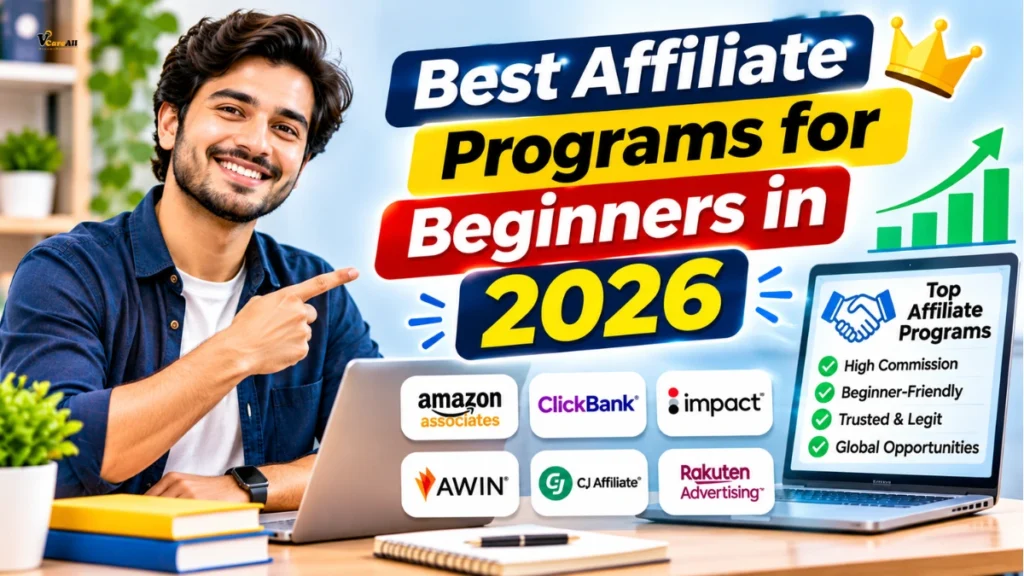
Affiliate Program Options to Research
| Program or Network | Common Product Categories | What to Verify |
|---|---|---|
| Amazon Associates | Physical products | Eligible social channels and local requirements |
| Impact | Retail, software, services | Individual advertiser approval |
| Awin | Retail and services | Publisher eligibility and channel rules |
| CJ Affiliate | Brands and services | Advertiser-specific approval |
| ClickBank | Digital and selected physical products | Product quality and promotional restrictions |
| PartnerStack | Software and business tools | Partner eligibility and traffic requirements |
| Rakuten Advertising | Retail and consumer brands | Publisher approval and permitted channels |
| Individual SaaS programs | Software subscriptions | Social, video, and email policies |
Inclusion in this table does not mean every program accepts website-free applicants or guarantees approval.
How to Select the Right Affiliate Program
Before joining, review the following details.
1. Commission structure
Does the program pay a fixed amount, a percentage, or another form of commission?
2. Payment model
Does it pay for sales, qualified leads, subscriptions, or other actions?
3. Referral attribution
How does the program decide which affiliate receives credit?
4. Cookie or tracking window
How long may eligible referral activity remain attributable under the program’s rules?
5. Payment threshold
How much approved commission must accumulate before a payout?
6. Payment method
Does the program support a payment method available in your country?
7. Promotional permissions
Are YouTube, Instagram, Pinterest, email, and other intended channels explicitly allowed?
8. Product quality
Is the product reliable, appropriately priced, and useful for your audience?
9. Refund and cancellation rules
Can commissions be reversed when orders are refunded or subscriptions are cancelled?
10. Affiliate support
Does the program provide clear reporting, documentation, and support?
Important Advice for Beginners
Avoid choosing a program simply because someone online claims it pays large commissions.
Read the official affiliate agreement and understand what actions actually qualify for payment.
How to Start Affiliate Marketing Without Money
One reason beginners explore affiliate marketing without a website is the possibility of starting with a low budget.
You may already have access to many of the tools required.
A smartphone can help you record videos, publish content, research topics, and manage social accounts.
Free plans for selected tools can also reduce initial costs.
Free or Low-Cost Tools to Consider
| Task | Example Tool or Method | Purpose |
|---|---|---|
| Graphic design | Canva free plan | Create visual content |
| Video editing | CapCut or another suitable free editor | Edit short videos |
| Content planning | Google Sheets | Organize publishing |
| Video publishing | YouTube | Reach viewers |
| Visual content | Share Reels and posts | |
| Topic research | Google Trends | Explore search interest |
| Search research | Google Search | Identify common questions |
| Analytics | Platform-native analytics | Review content performance |
| Email publishing | A service with an eligible free plan | Build a newsletter |
Tool availability, features, limits, and pricing can change. Check the latest terms before relying on a particular free plan.
A Simple Zero-Budget Starting Plan
First, choose one niche.
Select a topic you can comfortably discuss.
Next, choose one platform.
For example, YouTube Shorts.
Then, create five helpful pieces of content.
Focus on real questions people have about your niche.
After that, research suitable affiliate programs.
Check eligibility and permitted promotional methods.
Finally, measure audience response.
Learn which topics people watch, save, comment on, or ask questions about.
You don’t need expensive software to test your first content ideas.
However, affiliate marketing still requires time, effort, and consistency. A free setup does not guarantee earnings.
How to Find Affiliate Products That People Actually Need
Promoting random products is rarely a strong long-term strategy.
A better approach is to identify what your audience is trying to accomplish.
For example, suppose your audience consists of people starting home offices.
Their needs might include better lighting, improved comfort, organization, or video meeting equipment.
You can create content around those problems and recommend relevant solutions.
A Practical Product Research Process
Identify a specific problem
Example: People struggle with poor audio during online meetings.
Explore potential solutions
These might include microphones, headsets, quieter environments, or software adjustments.
Compare available products
Review product specifications, compatibility, price, warranty, and limitations.
Read independent customer feedback
Look for repeated complaints as well as positive comments.
Check the affiliate terms
Confirm that the product can be promoted through your chosen channel.
Create useful content
Explain who may benefit from the product and who might need another solution.
Product Selection Checklist
| Question | Why It Matters |
|---|---|
| Does it solve a real problem? | Creates useful recommendations |
| Is it relevant to the audience? | Improves content relevance |
| Are the features verifiable? | Supports accurate information |
| Is the pricing appropriate? | Helps buyers compare options |
| Are there significant limitations? | Encourages informed decisions |
| Is the company reputable? | Reduces customer risk |
| Are returns and support clear? | Helps assess buyer experience |
| Is promotion permitted? | Supports compliance |
A strong recommendation is not necessarily the most expensive product.
Sometimes a simpler or lower-cost option better matches the customer’s needs.
How to Get Traffic to Affiliate Links Without a Website
Traffic means the people who discover and interact with your content.
Without traffic, potential customers may never see your recommendations.
But traffic alone does not create income.
You need relevant visitors who are interested in the topic and trust the information.
Organic Traffic Methods
YouTube search
Create videos that directly answer questions people search for.
Instagram discovery
Publish relevant Reels, carousels, and educational content.
Pinterest search
Use accurate titles and descriptions for useful visual content.
Facebook engagement
Participate in permitted community discussions.
Email newsletters
Send valuable content to subscribers who opted in.
Search engine visibility
Some public social profiles, videos, and platform pages may appear in search results.
However, their visibility depends on indexing, platform settings, and search relevance.
Free Traffic vs. Paid Traffic
| Factor | Organic Traffic | Paid Traffic |
|---|---|---|
| Direct advertising cost | Usually none | Requires advertising spend |
| Main investment | Content and time | Budget, testing, optimization |
| Speed | Can take time to develop | Can generate exposure after approval |
| Long-term potential | Content may remain discoverable | Exposure generally depends on active campaigns |
| Main challenge | Earning attention | Achieving viable campaign economics |
| Beginner suitability | Often suitable for testing | Better approached with preparation |
Should Beginners Buy Traffic?
Paid advertising can be useful in some affiliate campaigns, but it introduces financial risk.
Some affiliate programs prohibit certain paid traffic methods, direct linking, trademark bidding, or specific ad placements.
Advertising platforms also apply their own destination, content, and business practice policies.
Before spending money, understand your program’s rules, expected conversion economics, and applicable advertising requirements.
For most beginners, organic content offers a practical way to learn audience preferences before considering paid campaigns.
How to Create Affiliate Content That Builds Trust
Content is the foundation of most website-free affiliate marketing strategies.
Without useful information, your posts can become nothing more than advertisements.
Good affiliate content helps people understand a problem, evaluate possible solutions, and make informed decisions.
Five Useful Types of Affiliate Content
1. Product tutorials
Explain how a product or service works.
Example: How to Set Up a USB Microphone.
2. Buying guides
Help readers understand what to consider before purchasing.
Example: What to Look for in a Beginner Camera.
3. Product comparisons
Compare products using consistent criteria.
Example: Wireless vs. Wired Keyboards.
4. Problem-solving content
Start with a common difficulty and explain practical solutions.
Example: How to Improve Lighting for Video Calls.
5. Product reviews
Explain advantages, limitations, features, and who the product might suit.
Only claim firsthand experience when you have genuinely used the product.
A Simple Content Formula
Use this structure:
Problem → Helpful Explanation → Possible Solution → Product Recommendation → Clear Disclosure
For example:
Problem: Your laptop becomes uncomfortable to use during long desk sessions.
Explanation: Screen positioning and workspace setup can influence comfort.
Possible Solution: Adjust the desk layout and consider an appropriate laptop stand.
Recommendation: Compare suitable stands based on height adjustment, stability, compatibility, and price.
Disclosure: State clearly if a recommended link could earn you a commission.
This approach makes the recommendation part of a helpful explanation rather than the entire purpose of the content.

How to Write Affiliate Marketing Content Using SEO Keywords
Even without a website, search optimization can help your content become easier to discover.
Platforms such as YouTube and Pinterest have their own discovery systems.
Google may also display certain publicly accessible videos and social content.
However, traditional website SEO and social media discovery are not identical.
Keyword Research for Affiliate Marketing
Start with a broad topic.
Example:
“Budget microphones”
Then explore more specific questions:
- Best microphone for online meetings
- USB microphone for beginners
- How to choose a podcast microphone
- Budget microphone buying guide
- USB vs. wireless microphone
These are examples of search phrases, not verified search-volume rankings.
How to Use Keywords Naturally
Place relevant terms where they improve understanding.
For YouTube:
- Video titles
- Descriptions
- Spoken explanations
- Relevant chapters and captions
For Pinterest:
- Pin titles
- Descriptions
- Relevant board information
For Instagram:
- Profile descriptions
- Captions
- Relevant hashtags
- Clear text explaining the content
Avoid repeating the same phrase unnaturally.
Google recommends helpful, reliable, people-first content rather than material designed mainly to manipulate search rankings.
Example Keyword Strategy
| Content Topic | Main Keyword | Supporting Keyword |
|---|---|---|
| Starting affiliate marketing | affiliate marketing for beginners | how to start affiliate marketing |
| Website-free promotion | affiliate marketing without a website | affiliate marketing without a blog |
| Social promotion | affiliate marketing on Instagram | Instagram affiliate marketing |
| Video promotion | YouTube affiliate marketing | affiliate marketing using YouTube |
| Budget-friendly setup | affiliate marketing without money | free affiliate marketing |
| Product selection | best affiliate products | how to choose affiliate products |
The objective is to make content relevant and useful, not simply to include as many keywords as possible.
Find the Right Affiliate Program!
Choosing a suitable affiliate program can make your journey easier.
Compare options, commission structures, and promotional requirements.
How Much Money Can You Make With Affiliate Marketing Without a Website?
Affiliate marketing earnings vary considerably.
Some beginners may earn nothing during their initial learning period.
Others may eventually earn commissions after developing an audience and publishing helpful content.
There is no reliable fixed income amount for someone starting affiliate marketing without a website.
Your results can depend on:
- Audience size and relevance
- Content quality
- Affiliate commission rates
- Product pricing
- Conversion rates
- Attribution conditions
- Refunds and cancellations
- Competition
- Platform changes
- Promotional expenses
Affiliate Marketing Earnings Example
Suppose you promote a product costing $50.
The affiliate program offers a 10% commission on eligible sales.
You would receive a gross commission of $5 for each qualifying purchase.
| Qualifying Sales | Commission Per Sale | Gross Commission |
|---|---|---|
| 1 | $5 | $5 |
| 10 | $5 | $50 |
| 25 | $5 | $125 |
| 50 | $5 | $250 |
| 100 | $5 | $500 |
These figures are hypothetical calculations, not typical earnings or expected performance.
They also do not account for expenses, taxes, adjustments, or returned orders.
Understanding Conversion Rates
A conversion rate measures the percentage of tracked visitors who complete a defined action.
For example, if 200 tracked visitors arrive at a merchant’s offer and 4 complete an eligible purchase:
Conversion Rate = (4 ÷ 200) × 100 = 2%
This does not mean every affiliate campaign will achieve a 2% conversion rate.
Actual conversion rates can vary widely based on the audience, offer, customer intent, pricing, and tracking.
Why Quality Traffic Matters
Imagine two creators.
Creator A attracts thousands of people who have little interest in the recommended product.
Creator B attracts a smaller group actively researching the exact product category.
Creator B might generate more relevant purchase opportunities despite receiving fewer visitors.
The lesson is simple:
Interested visitors are generally more useful than visitors who have no reason to consider your recommendation.
How to Track Affiliate Marketing Performance Without a Website
Tracking helps you understand whether your content is reaching the right audience.
It also helps you identify which recommendations generate engagement and qualifying actions.
Most affiliate programs provide reporting tools, although the details differ.
Important Affiliate Marketing Metrics
| Metric | Meaning | Why It Matters |
|---|---|---|
| Impressions | Number of times content is displayed | Measures exposure |
| Views | Recorded video or content views | Indicates content consumption |
| Link clicks | Number of clicks on tracked links | Measures referral interest |
| Click-through rate | Clicks divided by eligible impressions | Helps assess link engagement |
| Conversions | Completed tracked actions | Measures desired outcomes |
| Conversion rate | Conversions divided by defined visitor or click count | Helps evaluate performance |
| Commission | Earnings credited under program rules | Measures revenue |
| Earnings per click | Commission divided by tracked clicks | Helps compare referral value |
| Refunds or reversals | Cancelled or invalidated commissions | Helps assess actual credited earnings |
Example Performance Calculation
Suppose your affiliate reporting dashboard shows:
Total tracked clicks: 500
Approved conversions: 10
Total credited commission: $100
Your conversion rate would be:
10 ÷ 500 × 100 = 2%
Your earnings per click would be:
$100 ÷ 500 = $0.20
These figures can help you compare performance across eligible campaigns.
How to Improve Tracking
Use the reporting dashboard provided by your affiliate network.
Where permitted, use campaign IDs or sub-identifiers to distinguish referral sources.
For example, you might separate referrals from different videos.
Avoid modifying tracking links in ways that break attribution or violate the merchant’s agreement.
Also remember that analytics systems may count visits, clicks, and conversions differently.
What Should You Improve First?
If content receives few views, work on topic selection, presentation, and relevance.
If content receives views but few link clicks, examine whether the recommendation is clear and relevant.
If links receive clicks but few conversions, investigate the product, offer, audience intent, and available reporting.
Don’t assume every problem can be solved by posting more links.
Common Affiliate Marketing Mistakes Beginners Should Avoid
Affiliate marketing is easy to understand, but building a sustainable strategy requires judgment.
These mistakes can prevent beginners from making progress.
Mistake 1: Promoting Too Many Unrelated Products
When your recommendations are scattered across unrelated categories, your audience may not understand what your account is about.
Choose a niche and publish content that consistently serves it.
Mistake 2: Focusing Only on Commission Rates
A high commission does not automatically make a product worth recommending.
Evaluate usefulness, suitability, quality, and customer experience.
Mistake 3: Posting Affiliate Links Everywhere
Repeated unsolicited promotional links can damage trust and violate platform or community policies.
Share recommendations only in permitted locations and appropriate contexts.
Mistake 4: Expecting Immediate Income
Affiliate marketing may take time to learn.
Traffic, engagement, and sales are not guaranteed.
Focus first on developing useful content and understanding your audience.
Mistake 5: Ignoring Audience Questions
Questions in comments, discussions, and messages can reveal what information people need.
Use those insights to create better content.
Mistake 6: Misleading Product Claims
Avoid exaggerating benefits, inventing product experiences, or hiding important limitations.
Accurate recommendations support better decisions.
Mistake 7: Hiding Affiliate Relationships
People should understand when you may benefit financially from their purchase.
Clear disclosures help maintain transparency and are often legally or contractually required.
Mistake 8: Ignoring Affiliate Program Rules
Each program has its own requirements covering eligible promotional channels, trademarks, link placement, and qualifying actions.
Review the rules rather than assuming every program works the same way.
Mistake 9: Relying Entirely on One Product
Products can be discontinued, commission structures can change, and programs can close.
Over time, consider multiple relevant offers rather than relying entirely on one source of commission.
Mistake 10: Never Reviewing Performance
Without reviewing performance, you may keep repeating content strategies that do not meet your goals.
Use available analytics to make informed improvements.
Affiliate Marketing Rules and Disclosures You Should Know
Transparency is an essential part of responsible affiliate marketing.
A financial relationship can affect how people interpret a recommendation, even when the recommendation is sincere.
In the United States, the Federal Trade Commission provides guidance on endorsements and affiliate marketing disclosures.
A disclosure generally needs to be clear, noticeable, and close enough to the recommendation that ordinary users can understand the relationship.
Other countries may have different or additional legal requirements.
Example Affiliate Disclosure
“This post contains affiliate links. If you purchase through these links, I may earn a commission at no additional cost to you.”
The wording and placement should be appropriate to the platform, applicable laws, and affiliate program.
For example, Amazon Associates requires specific identification language and clear link-level disclosures.
A disclosure hidden on a distant page or buried among hashtags may not be sufficient.
Important Compliance Checklist
- Review the affiliate program’s current terms.
- Verify which promotional platforms are permitted.
- Disclose affiliate relationships clearly.
- Make truthful claims about products.
- Do not fabricate personal experiences.
- Respect copyrighted content and trademarks.
- Follow platform-specific advertising policies.
- Avoid unsolicited bulk messages.
- Follow applicable email marketing laws.
- Review tax and payment obligations in your jurisdiction.
Remember: Being transparent about affiliate commissions is a normal part of professional affiliate marketing.
A Practical 30-Day Affiliate Marketing Plan for Beginners
Starting can feel overwhelming when you’re learning multiple things at once.
A simple plan can help you stay focused.
The goal of your first month should be to understand the process, publish useful content, and collect information about audience interest.
It should not be to reach an arbitrary earnings target.

Week 1: Research and Setup
Choose one niche.
Identify your target audience.
Research common questions.
Select one publishing platform.
Review relevant affiliate programs.
Set up your profile.
Create a basic content plan.
Goal: Establish a clear topic and publishing direction.
Week 2: Create Your First Content
Prepare educational content that addresses genuine audience questions.
For example, if your niche is home office equipment, create posts about:
- Choosing a desk lamp
- Organizing charging cables
- Comparing microphone types
- Improving a small workspace
- Selecting basic computer accessories
Publish content according to a realistic schedule.
Avoid rushing through inaccurate product claims just to produce more posts.
Goal: Begin building a collection of helpful content.
Week 3: Improve Your Content and Recommendations
Review impressions, views, comments, and other available metrics.
Identify questions viewers ask.
Research appropriate affiliate products and verify promotional permissions.
Add relevant recommendations and clear disclosures where permitted.
Experiment with clearer explanations, titles, and visuals.
Goal: Connect useful content with genuinely relevant product recommendations.
Week 4: Review and Refine
Check your content and available affiliate reports.
Look for patterns.
Ask questions such as:
Which topics generated the most interest?
Which explanations encouraged meaningful discussion?
Which content helped viewers understand products?
Were any recommendations unclear?
Do you need to improve your niche focus?
Use the answers to plan your next month.
Goal: Make informed changes rather than guessing.
30-Day Action Plan Summary
| Time | Main Activity | Expected Learning |
|---|---|---|
| Days 1–7 | Niche and platform research | Understand audience needs |
| Days 8–14 | Content creation | Develop publishing skills |
| Days 15–21 | Recommendations and improvements | Learn audience response |
| Days 22–30 | Performance review | Plan future content |
This is a learning schedule, not a guarantee of traffic, approval, or earnings.
Advanced Ways to Grow Affiliate Marketing Without a Website
Once you understand the basics and have a consistent publishing process, you can explore ways to improve your strategy.
Build Content Around Customer Questions
Instead of creating random promotional posts, collect questions from your audience.
Group those questions into topics.
For example, a photography accessories account might create a series covering camera tripods, lighting, microphones, and storage.
This gives people a reason to return for related information.
Create Related Content Series
A single video may explain a product.
A content series can help viewers understand an entire category.
Example:
Video 1: How to Choose a Home Office Microphone
Video 2: USB vs. Wireless Microphones
Video 3: Common Microphone Setup Mistakes
Video 4: Budget Microphone Accessories
Video 5: How to Improve Recording Quality
Each video addresses a different question within the same niche.
Repurpose Original Content
A longer tutorial can provide material for shorter videos, carousels, or educational posts.
For example, a YouTube comparison might inspire:
- An Instagram Reel explaining one important difference
- A Pinterest graphic outlining buying considerations
- An educational newsletter
- A Facebook post answering a common question
Adapt the content to each platform rather than copying it everywhere unchanged.
Build an Email Audience Where Appropriate
A permission-based email audience can reduce your reliance on a single social platform.
However, continue to follow the affiliate program’s email restrictions and applicable marketing requirements.
Improve Product Comparisons
Compare products using meaningful criteria such as:
- Features
- Price
- Compatibility
- Ease of use
- Warranty
- Customer support
- Limitations
- Suitable users
Explain why one option may suit a particular need better than another.
Review Your Affiliate Offers Regularly
Products and commission agreements can change.
Check whether a product is still available, whether its pricing or specifications have changed, and whether the affiliate link remains valid.
Regular reviews help keep your recommendations accurate.
Affiliate Marketing Without a Website vs. Dropshipping
Beginners sometimes confuse affiliate marketing with dropshipping.
Both involve promoting products online, but their business models are different.
In affiliate marketing, you generally direct potential customers to another merchant and receive compensation for qualifying referrals.
In dropshipping, you operate a retail business and arrange for suppliers to fulfill orders to customers.
Key Differences
| Feature | Affiliate Marketing | Dropshipping |
|---|---|---|
| Main role | Promote third-party offers | Operate an online retail business |
| Revenue model | Affiliate commissions | Revenue from customer sales, less costs |
| Product inventory | Usually not managed by affiliate | Typically fulfilled by supplier |
| Order responsibility | Usually handled by merchant | Seller remains responsible to customer |
| Customer service | Primarily handled by merchant | Seller generally manages customer issues |
| Website requirement | Depends on program and channel | Often uses an online storefront |
| Pricing control | Usually limited | Seller generally controls retail pricing |
| Main marketing goal | Generate qualifying referrals | Generate profitable customer orders |
Which Is Better for Beginners?
Affiliate marketing may be simpler for someone who wants to focus on content and recommendations rather than operating a retail store.
Dropshipping involves additional responsibilities such as customer support, returns, pricing, supplier coordination, and business compliance.
Neither model guarantees profit.
Choose based on your resources, responsibilities, and long-term interests.
Is Affiliate Marketing Without a Website Worth It in 2026?
Affiliate marketing without a website remains a possible approach for creators who want to recommend products through approved digital channels.
People use videos, social platforms, and online discussions to research products and compare solutions.
This creates opportunities for relevant, trustworthy educational content.
However, the market is competitive.
Publishing a few promotional posts does not guarantee commissions.
Successful execution requires a combination of useful content, product relevance, audience understanding, transparent recommendations, and continuous improvement.
Advantages
- You may start without purchasing hosting.
- Some content platforms offer free account creation.
- You can work with products you do not manufacture.
- Multiple content formats are available.
- You can begin with a focused niche.
- You can learn practical marketing skills.
Limitations
- Social platform rules may change.
- Affiliate programs can reject applications.
- Traffic may fluctuate.
- Commissions are not guaranteed.
- Building an audience requires effort.
- Some programs require an established presence.
- You have less control over third-party platforms than over your own website.
For beginners, the strongest reason to start without a website is the opportunity to test a content strategy with relatively limited technical setup.
It is not a shortcut to guaranteed income.
Grow Your Audience Without Paid Advertising!
You don’t always need an advertising budget to reach potential customers.
Discover organic traffic strategies using videos and social media.
Final Thoughts: Start Small, Provide Value, and Build Trust
Learning how to do affiliate marketing without a website is easier when you understand one important principle: you don’t need to own a website to help people discover useful products.
You need a relevant audience, accurate information, suitable affiliate offers, and a promotional channel that permits your activity.
Whether you choose YouTube, Instagram, Pinterest, Facebook, or an email newsletter, your first priority should be helping people make better decisions.
Start with a niche you understand.
Choose one platform and learn how its audience discovers content.
Research reputable affiliate programs and confirm their requirements.
Create useful tutorials, comparisons, and educational posts.
Recommend products honestly, disclose your affiliate relationships, and measure what happens.
Over time, you can improve your content, explore additional channels, and decide whether an owned website would benefit your business.
Affiliate marketing is not about sharing the most links. It’s about making recommendations that are genuinely worth following.
You don’t need to launch a complicated online business on your first day.
Start with one useful piece of content, one relevant audience problem, and one clear plan.
Then keep learning, improving, and building something your audience can trust.
20. Frequently Asked Questions About Affiliate Marketing Without a Website
FAQ 1: Can I Start Affiliate Marketing Without a Website?
Yes. You can start affiliate marketing without a website if you join a program that accepts your chosen promotional channel. Eligible social accounts, video platforms, and other approved channels can be used to share recommendations. Always confirm the program’s requirements before applying.
FAQ 2: How to Do Affiliate Marketing Without a Website for Free?
Choose a niche, create an account on a suitable free platform, research affiliate programs, and publish useful educational content. You can use free tools for basic editing, planning, and analytics. Although you may avoid initial website costs, you still need to invest time and effort.
FAQ 3: Which Platform Is Best for Affiliate Marketing Without a Website?
The best platform depends on your strengths and audience. YouTube can work well for tutorials, Instagram for visual recommendations, Pinterest for idea discovery, and newsletters for ongoing communication. Check the affiliate program’s promotional policies before choosing.
FAQ 4: Can I Do Amazon Affiliate Marketing Without a Website?
Amazon Associates may accept eligible social media accounts, subject to the requirements for the relevant country and program. Social account eligibility, content standards, audience requirements, and application review conditions can apply. Check the official Amazon Associates documentation before registering.
FAQ 5: Can I Start Affiliate Marketing With No Followers?
You can begin creating content and building an audience with no followers. However, some affiliate programs require an established account or minimum audience before approval. Start by publishing valuable content and research programs suited to your current stage.
FAQ 6: How Long Does It Take to Earn Money From Affiliate Marketing?
There is no guaranteed timeline. It depends on your audience, content, product relevance, commission structure, and promotional strategy. Some beginners may not earn commissions during their early months. Focus on learning and improving rather than expecting immediate results.
FAQ 7: Can I Use Instagram for Affiliate Marketing Without a Website?
Yes, provided the affiliate program accepts Instagram promotion and you follow Instagram’s applicable policies. You can create educational posts, product demonstrations, and Reels. Use approved link placements and disclose affiliate relationships clearly.
FAQ 8: Is Affiliate Marketing Without a Website Safe and Legitimate?
Affiliate marketing is a legitimate marketing business model when you work with reputable companies and follow applicable rules. However, programs and offers vary in quality. Research companies, read payment terms, avoid misleading claims, and never pay suspicious fees based on promises of guaranteed earnings.
FAQ 9: How Do I Get Free Traffic for Affiliate Marketing?
You can attract organic traffic by creating useful YouTube videos, relevant Instagram content, original Pinterest Pins, and other educational material. Consistent niche-focused content can help people discover your recommendations, although organic reach and conversion results are never guaranteed.
FAQ 10: Is Affiliate Marketing Better With or Without a Website?
Both approaches have advantages. Starting without a website may reduce technical setup and upfront expenses. Owning a website can provide more control over content, search optimization, analytics, and long-term audience development. A beginner can start with an approved social platform and consider a website later if it supports their goals.